 blog
blog
Event Furniture Rental Guide for 2026
Table of Contents
- Event Furniture Rental Categories and What They Cost
- Your Party Equipment Rental Checklist
- Choosing Tables and Chairs for Events
- Best Practices for Event Furniture Setup
- Budgeting for Event Furniture Rental
- Logistics and Venue Compatibility Checklist
- Conclusion: Reserve Your Event Furniture Rental Early
- Frequently Asked Questions
Last Updated: October 2, 2026
Event Furniture Rental Categories and What They Cost
Event furniture rental is the practice of leasing tables, chairs, lounge pieces, tents, and decor for a single occasion rather than buying them outright, removing storage and cleanup problems in one move.
Seating and Tables
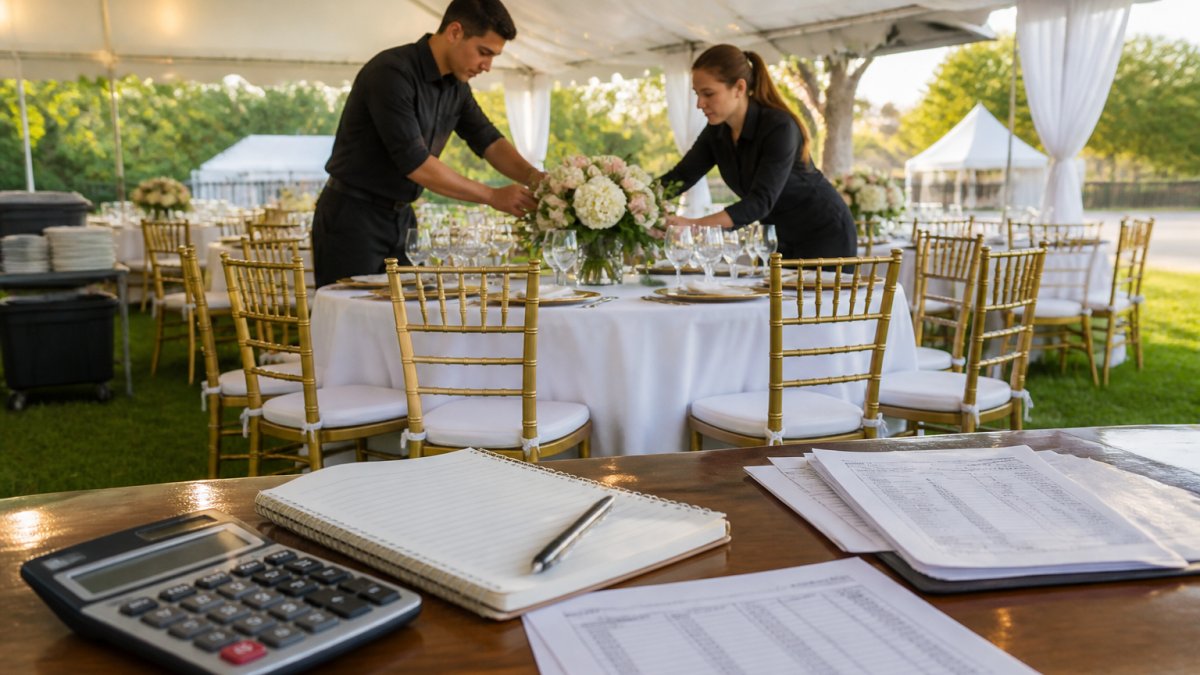
Seating and tables form the backbone of any rental order. The standard round table seats eight to ten guests, while rectangular banquet tables work better for buffets and head tables. Folding chairs cost less; padded and chiavari styles cost more but photograph better.
A common mistake is ordering chairs without confirming the table size. A 60-inch round takes eight chairs comfortably, not ten.
Lounge and Accent Pieces
Lounge furniture turns an empty corner into a destination. Sofas, armchairs, cocktail tables, and ottomans give guests a reason to linger instead of standing near the bar.
Accent pieces matter more than most hosts expect. A few cocktail tables near the entrance change how the whole room feels. Modular furniture lets you rearrange on site if the floor plan shifts.
Tents, Lighting, and Decor
Tents, lighting, and decor separate a plain setup from a real venue transformation. String lights, LED uplighting, and drapery do more visual work than almost anything else you can rent.
Customizable decor lets you match a color palette or a brand. For corporate events, brandable furniture and signage keep the theme consistent from the parking lot to the stage.
| Category | Typical Use | Key Consideration |
|---|---|---|
| Seating and tables | Dining, ceremonies, conferences | Seating capacity per table |
| Lounge and accent | Cocktail hours, VIP areas | Floor space and flow |
| Tents, lighting, decor | Outdoor events, evening galas | Power access and setup time |
Your Party Equipment Rental Checklist
A party equipment rental checklist keeps you from discovering a gap on event morning. Start with the guest count, then work backward through every touchpoint a guest will experience.
- Confirm guest count and add a 10% buffer for seating
- Count tables needed for dining, gifts, food, and drinks
- Reserve chairs to match every table
- Book linens, napkins, and table runners in your palette
- Add cocktail tables for standing areas
- Reserve tents if the event is outdoors
- Confirm lighting and power needs
- Arrange delivery, setup, and pickup windows
- Review the rental agreement for damage terms
- Verify the venue's load-in rules and floor plan
Choosing Tables and Chairs for Events
Choosing tables and chairs for events comes down to three factors: guest count, venue space, and formality.
Round tables encourage conversation and suit weddings and dinners. Rectangular tables fit tighter spaces and work well for corporate meetings.
Chair choice affects both budget and comfort. Folding chairs are the workhorse option. Padded chairs add comfort for longer events. Chiavari chairs signal a more formal tone.
Best Practices for Event Furniture Setup
Best practices for event furniture setup start with a floor plan drawn to scale. Mark exits, bars, the dance floor, and the stage before you place a single table.
Leave at least 36 inches between tables for walking, and wider paths near the bar and buffet. Cluster lounge furniture in corners and edges so the center stays open.
Delivery and installation timing matters as much as the layout.
Budgeting for Event Furniture Rental
Most hosts treat furniture as a line item to price after the venue and catering are booked. That is backward.
Think in percentages of total event spend rather than dollar figures. Most planners land on furniture, rentals, and decor at roughly 10 to 15 percent of the budget for a wedding, and 8 to 12 percent for a corporate event where the venue supplies basics.
The four line items that make up every quote
A transparent rental quote separates into four buckets. Ask any provider to break the total down this way, and you can compare bids apples to apples.
| Bucket | What it covers | Typical share of total |
|---|---|---|
| Equipment | Tables, chairs, lounge, tents, lighting, linens | 60-75% |
| Delivery | Truck, mileage, labor to load and unload | 10-20% |
| Setup and teardown | On-site placement, styling, strike | 10-20% |
| Deposits and waivers | Refundable damage deposit or non-refundable waiver | 5-10% |
If a quote arrives as a single number, you cannot tell whether the delivery charge is fair or whether setup is bundled. Ask for the split.
How to allocate furniture spend across the room
Once you have a furniture number, divide it by zone rather than by item. A common allocation for a 150-guest event:
- Dining and seating, 45 to 55%. This is the largest bucket because it scales directly with headcount. Every guest needs a seat at dinner; not every guest needs a lounge chair.
- Lounge and cocktail, 15 to 20%. A handful of sofas, armchairs, and cocktail tables do more for perceived production value per dollar than almost anything else you can rent.
- Tents, lighting, and power, 15 to 25%. Outdoor events swing this bucket hard. A tent with no lighting is a tent nobody can use after sunset.
- Linens, tabletop, and accent decor, 10 to 15%. The finishing layer. Easy to trim if the budget tightens; easy to overspend on if you are not tracking per-table costs.
Where budgets actually break
The overruns are rarely the furniture itself. They are the edges:
- Guest count creep. Adding 20 guests late means two more tables, 20 more chairs, 20 more place settings, and often a larger tent. The furniture line can jump 15 percent on a headcount change that felt minor.
- Delivery distance and access. A venue 45 minutes out with a long carry from the truck to the setup area costs more in labor than a downtown ballroom with a loading dock. Ask about the carry distance before you sign.
- After-hours pickup. Venues that require strike the same night, or that lock the loading dock at a set hour, push labor into overtime. Confirm the pickup window early.
- Damage terms. A refundable deposit ties up cash; a non-refundable waiver costs less upfront but pays nothing back. Read both and pick based on how rough your crowd is.
For current rates in your area, request a written quote that lists equipment, delivery, setup, and deposits as separate lines. A provider who will not itemize is a provider you cannot budget against.
Logistics and Venue Compatibility Checklist
A furniture order that fits the guest list can still fail on event day because it does not fit the building. Logistics is where good plans die, and it is the section most rental sites skip. Run this checklist before you sign anything.
Measure the path, not just the room
Furniture has to travel from the truck to the setup area. Measure every choke point along that route:
- Doorways and gates. A standard commercial door is about 36 inches wide. A 60-inch round tabletop will not pass through upright, it has to be tipped on edge, which means you need roughly 60 inches of clear vertical space and a clear swing radius on both sides. Measure the narrowest point, not the widest.
- Elevators. Get the interior dimensions and the door opening, not just the weight capacity. A freight elevator with a 42-inch door will not accept a rolled 8-foot banquet table. If the venue has only a passenger elevator, expect to hand-carry chairs and use folding tables.
- Stairs and turns. A tight 90-degree turn at the top of a stairwell can stop a sofa cold. Walk the route with a tape measure, not from memory.
- Floor protection. Historic venues, ballrooms with hardwood, and any space with a polished stone floor may require felt pads, plywood runners, or a protective mat under tent stakes. Ask before the truck arrives.
Confirm the venue's rules in writing
Most venues have a one-page vendor policy. Get it. The items that most often surprise hosts:
- Approved vendor lists. Some venues require you to use their in-house rental partner or a vendor who has provided a certificate of insurance.
- Certificate of insurance (COI). Many venues require the rental company to carry general liability coverage and name the venue as additional insured. Ask your provider for a sample COI early, it takes days, not hours, to issue.
- Load-in and load-out windows. These are usually fixed and enforced. A 6 a.m. load-in and a same-night strike are common; a next-morning pickup is not always allowed.
- Stake, tent, and open-flame policies. Many venues prohibit staking into asphalt or irrigation lines and require water barrels or concrete weights instead. Open flame, candles, chafing fuel, fire pits, is often restricted or requires a permit.
- Noise and curfew. If your event runs past the venue's curfew, teardown may have to wait until morning, which changes your pickup window and your labor cost.
Respect the code requirements
Two sets of rules govern how furniture can be placed once it is inside:
- Fire code egress. Exit paths, aisles, and exit doors must stay clear. A common rule of thumb is that aisles serving occupied areas should be wide enough for two people to pass and for a wheelchair to turn; many jurisdictions require a minimum clear width in the range of 36 to 44 inches for main aisles. Do not block exit doors, fire extinguishers, or sprinkler risers with lounge furniture or drapery.
- Accessibility. Under the Americans with Disabilities Act, accessible routes through a venue must remain usable. That means at least one accessible path from the entrance to the seating, the restrooms, and the stage, with adequate turning space. Do not let a sofa or a cocktail table narrow an accessible route below the required clear width.
When in doubt, ask the venue coordinator to mark the approved furniture zones on a floor plan. That single step prevents most code problems.
Sequence the day
Logistics is also a schedule. A workable sequence for a Saturday event:
- Two to four weeks out: confirm COI, load-in window, and approved vendor status.
- One week out: finalize the floor plan and send it to both the venue and the rental provider.
- Day before: confirm truck arrival time and the on-site contact who will sign for delivery.
- Morning of: delivery and setup. Build the room from the outside in, tents and lighting first, then tables, then chairs, then linens and decor.
- Event end: strike begins. Confirm who is authorized to release the equipment and whether the venue requires a walkthrough before the truck leaves.
A short call with the venue coordinator answers most of these in ten minutes. Skipping that call is where most outdoor lounge and tent plans fall apart.
ADA Standards for Accessible Design, U.S. Department of Justice
Conclusion: Reserve Your Event Furniture Rental Early
The hardest part of event furniture rental is not the furniture; it is the timing. Peak weekends fill up fast, and last-minute orders mean limited inventory and rushed delivery. Lock in your date early, confirm the logistics checklist, and let a team that knows the area handle the heavy lifting. Special Event Depot offers commercial-grade, sanitized equipment, direct delivery to your venue, and tailored bundles for events of any size, backed by a 5.0 rating from more than 3,500 clients. Reserve now and turn your party vision into a seamless, unforgettable gathering.
Frequently Asked Questions
What should I look for when choosing an event furniture rental company?
Look for commercial-grade inventory, transparent pricing that includes delivery and setup, and a proven track record with events similar to yours. Ask about sanitation procedures, damage waiver policies, and whether they handle on-site setup. A company that provides a detailed rental agreement and clear communication from booking to breakdown will save you stress. Check reviews and request photos from past events to confirm quality.
How far in advance should I book event furniture rentals?
For peak seasons like spring and fall, book at least 4-6 weeks ahead. For large events over 150 guests or holiday weekends, 2-3 months is safer. If your event is in three weeks, contact rental companies immediately; they may still have availability, especially if you are flexible on styles. Early booking locks in inventory and gives you time to finalize your event floor plan and rental agreement.
Are event furniture rentals typically sanitized before delivery?
Reputable rental companies sanitize all furniture between events. Ask specifically about their cleaning process: tables and chairs should be wiped down with commercial-grade cleaners, and linens should be freshly laundered. If sanitation is a concern, request confirmation in your rental agreement. Commercial-grade equipment is easier to clean thoroughly than standard residential furniture, which is one reason it is worth the investment.
Can I rent event furniture for backyard parties?
Yes, backyard parties are a common rental use. Rental companies deliver directly to your home, set up tables, chairs, tents, and lounge furniture, then pick everything up after the event. Provide clear access instructions and measure your yard to ensure the delivery truck can reach the setup area. For smaller backyards, choose modular furniture and cocktail tables to maximize space without overcrowding.