 How-to
How to Anchor Event Tents on Concrete Safely
Last Updated: November 21, 2026
Quick Summary
To anchor event tents on concrete safely, use ballast weights on every leg, straps to fixed anchor points, or drilled drop-in expansion anchors set into the slab. Ballast suits small canopies and rented venues, while drilled anchors give the strongest hold on exposed sites.
- Hang sandbags or water barrels from each leg base, not the frame crossbar.
- Small 10 × 10 ft canopies need 40-60 lb per leg, with extra on the windward side.
- Mark drilled anchor points 18 to 24 inches out from each tent leg.
- Clean drilled holes thoroughly, since leftover dust stops anchors from gripping.
- If gusts are forecast above 35 mph, have a postponement or indoor backup plan ready.
Table of Contents
- Anchor Event Tents on Concrete: Methods That Hold
- How to Anchor a Canopy Tent on Concrete Without Drilling
- Concrete Tent Weights for Event Tents: How Much Ballast You Need
- The Strongest Concrete Anchors for Tents and How to Install Them
- Event Tent Wind Safety and Anchoring in North Texas
- Reserve Your Tent and Anchoring Plan
- Frequently Asked Questions
Anchor Event Tents on Concrete: Methods That Hold
Learning how to anchor event tents on concrete safely starts with one hard truth: concrete offers no soil for stakes, so every anchor must either weigh the tent down or bolt into the slab. The right method depends on your surface, your tent size, and the weather forecast.
Three approaches cover almost every situation:
- Ballast: sandbags, water barrels, or concrete weights placed on the tent legs
- Straps and guy lines: tension lines tied to existing structures or weighted anchors
- Drilled anchors: drop-in expansion anchors set into the concrete itself
Ballast, straps, and drilled anchors compared
Each method trades setup time against holding strength. Here is how they stack up.
| Method | Setup Time | Holds Against | Best For | Removable |
|---|---|---|---|---|
| Ballast weights | 15-30 min | Steady wind, light gusts | Patios, driveways, rented venues | Yes |
| Straps and guy lines | 20-40 min | Moderate wind with good anchor points | Tents beside fences or posts | Yes |
| Drilled drop-in anchors | 60-90 min | Strongest hold on concrete | Long events, exposed sites | Yes, with patching |
Setup Time
Ballast is fast and leaves no marks. Drilled anchors hold best but require permission and repair afterward. Straps sit in the middle: cheap, quick, and only as good as what you tie them to.
How to Anchor a Canopy Tent on Concrete Without Drilling
You can anchor a canopy tent on concrete without drilling by using weighted ballast on every leg, plus straps to keep the frame from shifting. A 10 × 20-ft pop-up canopy is light enough that ballast alone works for most backyard events. Our 10 × 20-ft pop-up canopy rental is available for your event.
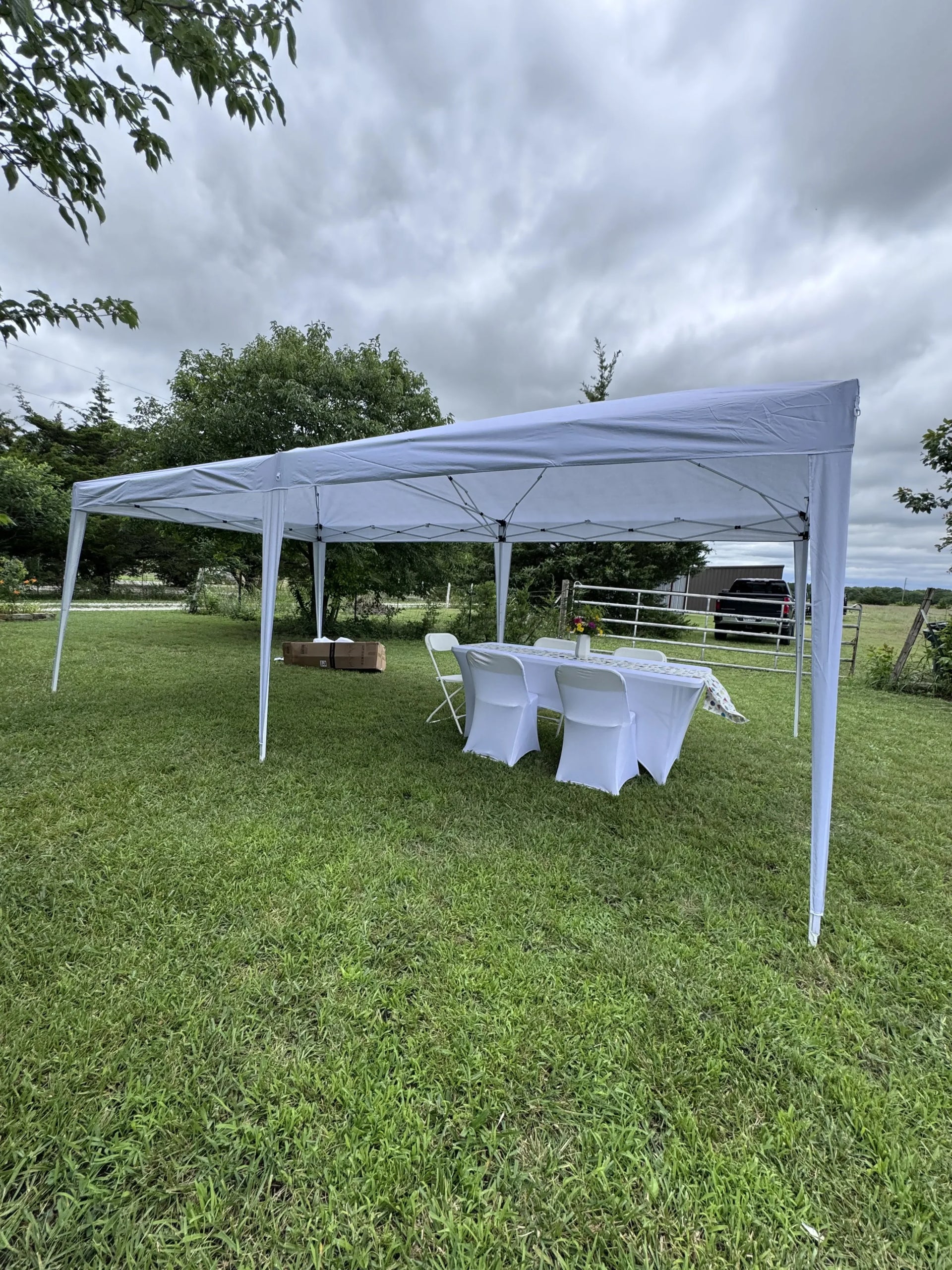
Follow this order:
- Set the canopy in its final spot and lock every leg at the same height.
- Fill sandbags or water barrels and hang them from the base of each leg, not the frame.
- Run a strap from each corner to a weighted anchor point a few feet out.
- Tighten straps until the frame stops swaying, then check again after 30 minutes.
- Recheck ballast whenever gusts pick up during the event.
Watch out: draping a sandbag over a crossbar instead of the leg base does almost nothing. The weight needs to sit low and pull down, not hang loose.
Concrete Tent Weights for Event Tents: How Much Ballast You Need
There is no single ballast number that fits every tent, but you can get close with a simple calculation instead of guessing. Required weight rises with tent size, leg count, and how exposed the site is. A canopy tucked beside a building needs far less than one standing alone in an open field.
Start with the manufacturer's anchor weight specification. Check the anchor weight specification from the tent manufacturer before setup, and ask the rental company if you cannot find it.
Use this as a working rule:
- Small canopies (10 × 10 ft): 40-60 lb per leg, with extra on the windward side
- Mid-size frame tents (10 × 20 ft): 80-120 lb per leg, plus corner straps
- Large frame tents (20 × 30 ft and up): follow the manufacturer's spec, and plan on 100+ lb per leg in exposed sites
- Open, exposed sites: add 50% more ballast and use guy lines
- Loose or cracked concrete: skip drilling and rely on ballast, but inspect the slab for shifting before loading
Weigh down the legs first, then the corners. Never stack all your weight on one side. Distribute sandbags or water barrels so each leg carries its share, and check that the weights sit low and pull down rather than hanging loose from the frame.
The Strongest Concrete Anchors for Tents and How to Install Them
An expansion anchor is a metal sleeve that widens inside a drilled hole when you tighten the bolt, gripping the concrete from the inside. Pair it with an eyebolt and you have a solid tie-down point for any frame tent.
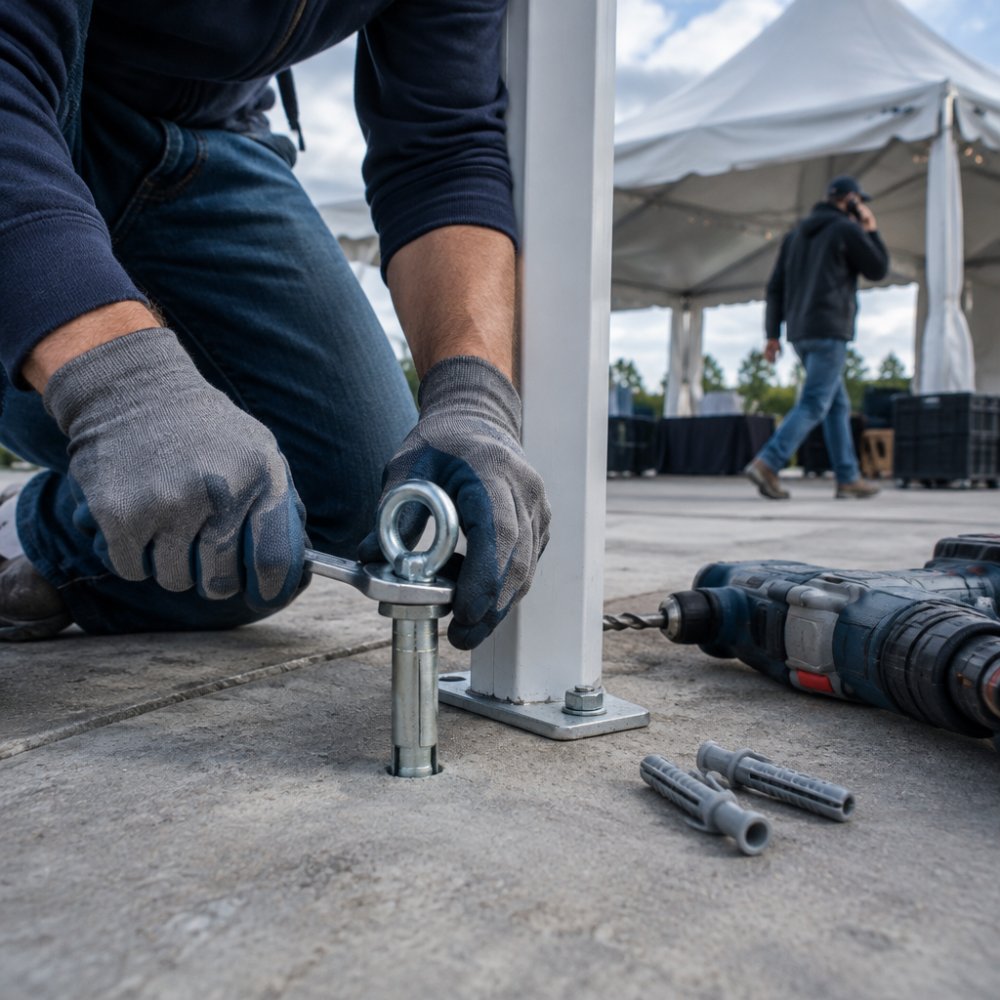
Drilling and setting drop-in anchors
- Confirm you have written permission to drill, and check for buried utilities first.
- Mark anchor points 18 to 24 inches out from each tent leg.
- Drill each hole to the anchor's stated depth, typically around 3¼ inches, using a concrete drill bit.
- Clean the hole thoroughly with a brush and blower.
- Tap the anchor plug in until it sits flush with the surface.
- Thread the eyebolt in and tighten the set screw.
- Attach straps to the eye bolt and tension them evenly.
Watch out: skipping the hole cleanup is the most common failure. Dust left in the hole stops the anchor from gripping, and it will pull loose under load.
Event Tent Wind Safety and Anchoring in North Texas
North Texas wind is the variable that decides whether your anchoring plan works. Open fields around Anna, TX give gusts a clear run at a tent, and summer storms arrive fast. No anchoring system makes a tent safe in a severe storm.
Before event day, build a wind plan around three checkpoints:
- Morning forecast: Check the National Weather Service forecast for Anna, TX and note the predicted sustained wind speed and gust range. If gusts are forecast above 25 mph, plan for extra ballast and guy lines. If gusts are forecast above 35 mph, have a postponement or indoor backup plan ready.
- Two hours out: Recheck the forecast and look at the sky. A sudden drop in temperature or a darkening horizon often means a gust front is coming. If gusts are already pushing the tent frame, stop setup and secure what is already standing.
- During the event: Assign one person to watch the windward side and the ballast. Warning signs include shifting sandbags, straps that have gone slack, and a frame that sways more than it did at setup.
If the tent becomes unstable, do not try to hold it down by hand. Move guests out from under the tent and away from the legs, then either add ballast to the windward side or drop the canopy if the frame is a pop-up. For frame tents, evacuate the area and call the rental company before attempting to dismantle anything under load.
Keep guests out from under the tent during lightning, and do not stand near the tent legs or anchor straps during a storm. Concrete slabs can become slick when wet, and loose straps become trip hazards when guests move quickly.
If your event is in a residential yard, check whether a permit applies before you drill. Our guide on wedding permits for yard events walks through what to confirm.
Reserve Your Tent and Anchoring Plan
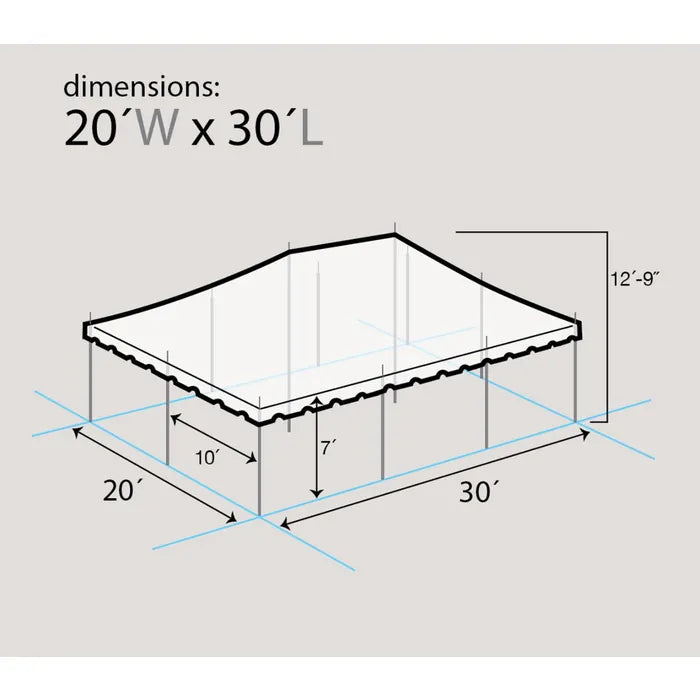
The anchoring method is only half the job. The other half is having the right tent and a crew that knows how it should sit on your surface. Special Event Depot delivers commercial-grade rentals across North Texas, including our 20 × 30-ft West Coast frame tent, which gives you 600 square feet with no center poles. Setup is included in the price, and additional costs may apply when a tent cannot be staked down.
Want to budget first? See what party tent rentals in Anna really cost or our full 2026 tent rental pricing guide. With 3.5k+ clients and a 5.0 rating, we have anchored tents on concrete, grass, and gravel all over the area.
Concrete anchoring rewards planning, not muscle. Confirm permission, match your method to the surface, and check the forecast before setup day. Special Event Depot handles delivery, setup, and anchoring guidance so your tent stays put. Get started with Special Event Depot and reserve a tent that fits your venue and your weather.
Frequently Asked Questions
How can I secure my tent on concrete?
You have three practical options: removable ballast such as sandbags or water barrels, straps tied to existing structures or weighted bases, or drilled drop-in expansion anchors with eyebolts. Ballast and straps work when drilling is not allowed, while drilled anchors give the highest holding capacity. Whichever method you choose, check the tent manufacturer's wind rating and the venue's permission first, and inspect every connection before guests arrive.
Can you anchor a tent to concrete without drilling?
Yes. Use ballast systems like sandbags, concrete buckets, or water barrels placed at each leg, and connect legs with straps or guy lines where the venue allows. This is the standard approach for rented canopies on patios and driveways. Keep in mind that ballast relies on weight and friction, so you need enough of it and a level slab. For larger event tents, confirm with the rental company that ballast-only anchoring suits your tent size and expected conditions.
How much weight does each tent leg need on concrete?
There is no single number that fits every tent. Required ballast depends on tent size, leg count, wind exposure, and the manufacturer's stated requirements. A common starting point is roughly 40 to 50 pounds per leg for a small pop-up canopy in calm conditions, with more weight added for larger tents or open, windy sites. Always follow the tent maker's anchoring instructions and ask your rental provider to confirm the ballast plan for your specific setup.
When should you take down an event tent because of wind?
Stop using a tent when winds reach the threshold the manufacturer states, and evacuate before conditions worsen. Economy Tent advises that no anchoring system makes a party tent safe in a severe storm and reports that a tent should not be used when winds exceed 35 mph. Watch local forecasts for Anna and the surrounding area, and have a plan to lower or remove canopies if gusts pick up during your event.