 how-to
How to Ensure Clean Event Rentals: Step-by-Step
Table of Contents
- What to Expect: Cleanliness Standards for Event Rentals
- Your Event Rental Cleaning Checklist: Before, During, and After
- Step-by-Step Cleaning and Sanitizing Protocol by Equipment Type
- Event Rental Linen Inspection: What to Look For
- Outdoor Event Rental Cleaning Tips for North Texas Weather
- Questions to Ask an Event Rental Company About Cleaning
- What If Rentals Arrive Dirty? Your Rights and Responsibilities
- Conclusion: Enjoy a Worry-Free Event with Clean Rentals
- Frequently Asked Questions
Last Updated: October 7, 2026
What to Expect: Cleanliness Standards for Event Rentals
Renting party equipment shouldn't feel like a gamble. Learning how to ensure clean event rentals starts with knowing what "clean" actually means for tables, chairs, tents, and linens.
Clean event rentals means equipment that has been washed, sanitized, inspected, and delivered free of stains, odors, pests, and residue. It is not just a quick wipe-down between jobs.
That distinction matters.
So what should you expect from a provider that takes this seriously?
- Every surface wiped and dried before it leaves the warehouse
- Linens laundered, pressed, and stored sealed
- Tents checked for mildew, rips, and pest damage
- Chairs inspected for cracks, wobbles, and gum
- Delivery crews wearing gloves when handling food-contact items
How to Tell If Event Rentals Are Actually Clean
A quick visual check catches most problems before your guests arrive. Here's what to look for:
- Run your hand across surfaces. Sticky spots or grit mean residue was left behind.
- Smell the linens. Fresh laundry has no scent. Musty smells point to damp storage.
- Check chair joints and undersides. Crumbs and gum hide where eyes don't go.
- Look at tent seams and corners. Dark speckles mean mildew.
If something fails these checks, say so before the crew leaves.
Your Event Rental Cleaning Checklist: Before, During, and After
A solid event rental cleaning checklist splits into three phases: before the event, during it, and after the last guest leaves. Each phase has its own jobs, and skipping one usually shows up as a problem later.
Pre-Event Preparation and Site Inspection
Walk the venue before anything gets unloaded. Check the ground for mud, sprinkler overspray, and pet waste. A site inspection now saves a scrubbing job later.
Then confirm the drop-off plan with your rental company. Ask where equipment will sit, who signs for it, and what time setup starts. Clear communication here prevents the "stuff showed up dirty and nobody knows why" problem.
During-Event Spot Cleaning and High-Touch Surfaces
Keep a small cleaning kit on hand during the party. A spray bottle, microfiber cloths, and trash bags handle most mid-event messes.
Focus on high-touch surfaces: serving tables, drink stations, chair backs, and door handles on tents. Wipe these down every couple of hours. It takes five minutes and keeps things presentable.
Post-Event Cleanup and Turnaround Time
Scrape plates into trash bins, not onto the ground. Shake crumbs off linens before bagging them. Stack chairs the way they arrived.
Turnaround time matters here. Rental companies need enough hours between pickup and the next event to clean everything properly.
| Phase | Main Jobs | Who Handles It |
|---|---|---|
| Before | Site check, confirm drop-off | Host + rental crew |
| During | Wipe surfaces, empty trash | Host or hired staff |
| After | Scrape, shake, stack, bag | Host + rental crew |
Step-by-Step Cleaning and Sanitizing Protocol by Equipment Type
Not all rental gear cleans the same way. Tents need different care than linens, and linens need different care than plastic chairs. The gap most guides leave open is the how: which product, at what dilution, for how long, and on which material. Here is a repeatable protocol by equipment type, built around EPA-registered disinfectants and material compatibility.
The Two-Step Rule: Clean First, Then Disinfect
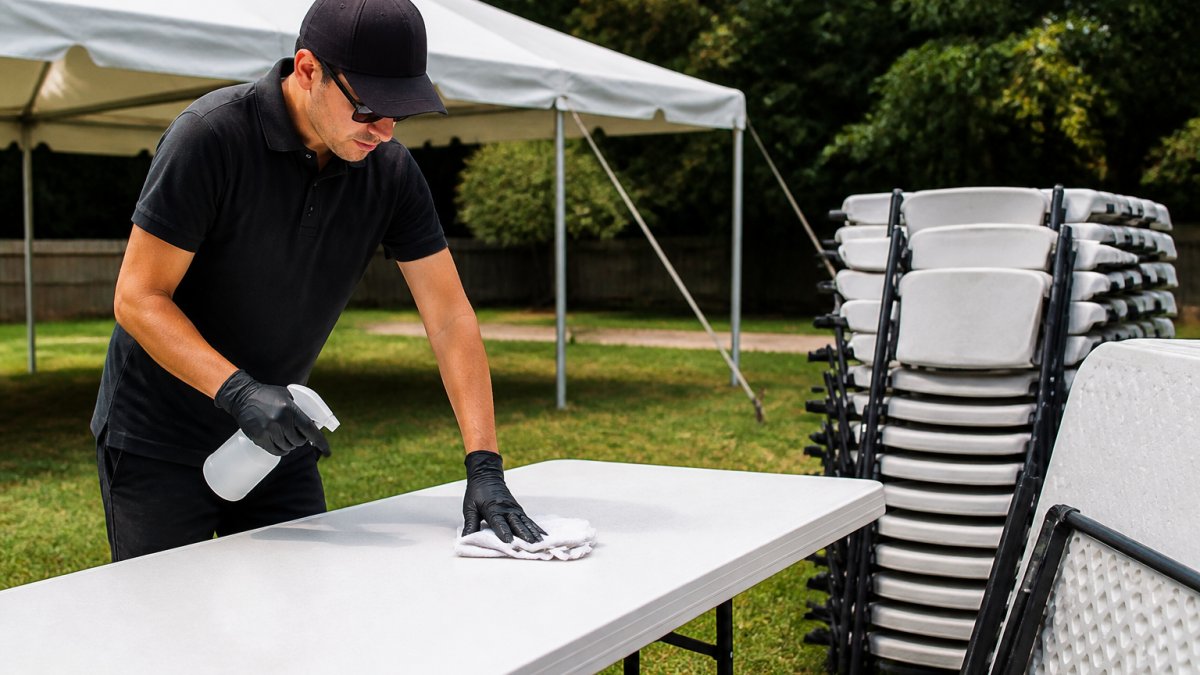
Every surface gets the same first move: clean off visible soil with soap and water, then apply disinfectant. Disinfectants do not work on dirty surfaces. The EPA's registered product labels list a contact time, the number of minutes the surface must stay visibly wet, and that number varies by product, often from 30 seconds to 10 minutes. Read the label; do not guess.
Tents, Tables, and Chairs
- Sweep or rinse loose debris off tents before anything else.
- Wash vinyl tent tops with mild soap and water. Avoid bleach and alcohol on vinyl and coated fabrics, they dull the finish and break down coatings.
- Rinse and dry fully. Damp tents stored in a bag grow mildew fast.
- Wipe table legs and undersides, not just the top. Food residue collects on the underside lip.
- Scrub chair seats and backs, then check joints for gum and crumbs.
- Disinfect high-touch points, chair backs, table edges, and armrests, with an EPA-registered product at its labeled contact time.
- Let everything air-dry before stacking or folding.
Floors, Linens, and High-Touch Surfaces
- Floors: sweep first, then mop with a mild cleaner. Skip harsh bleach on dance floors, it can cloud the finish.
- Linens: wash on the hottest cycle the fabric allows, dry fully, and store in sealed bags. For stains, treat before washing; heat sets protein stains permanently.
- High-touch spots: sanitize drink stations, serving utensils, and handrails. Use a food-contact-safe sanitizer on anything that touches food or mouths.
Inflatables and Soft Goods
Inflatables and fabric-covered items need their own approach. Wipe vinyl inflatables with mild soap and water, then apply an EPA-registered disinfectant labeled for the surface. Never machine-wash inflatables. For fabric soft goods like drapes and chair covers, follow the care tag; when in doubt, professional laundering is safer than a home wash that shrinks or bleeds color.
Event Rental Linen Inspection: What to Look For
Event rental linen inspection comes down to four checks: stains, tears, smells, and seams. Run through them every time linens arrive.
Hold each piece up to light. Look for set-in stains, frayed edges, and pulled threads. Sniff for mustiness. Then check the hems and corners, where wear shows first.
If a linen fails, set it aside and ask for a swap. Don't try to hide a stain under a centerpiece. Guests notice.
Outdoor Event Rental Cleaning Tips for North Texas Weather
Outdoor gear faces contamination risks that indoor rentals never see: mold, mildew, pests, pollen, and storm-driven mud. Most guides skip these entirely. Here is how to handle each one before, during, and after an outdoor event.
Mold and Mildew
Mildew shows up as dark speckles on tent seams, chair webbing, and stored linens. It thrives in damp storage and humid air. The fix is prevention: dry every item fully before it is bagged or stacked, and store gear indoors in a climate-controlled space when possible. If mildew appears, wash with mild soap and water, dry in direct sun, and inspect before reuse. Persistent mildew smell means the item should be retired or professionally treated, it will not wash out.
Pests
Stacked chairs, folded tents, and bagged linens are ideal harborage for insects and rodents. After every event, shake out and inspect folded items before storage. Look for droppings, chewed edges, and egg cases in seams and joints. Store gear off the floor on pallets or shelving, and keep storage areas dry and debris-free. A common pattern is pest damage discovered only at the next event, a quick post-event inspection prevents that.
Weather-Related Contamination
- Rain: Dry everything after rain. Wet tents stored overnight grow mildew.
- Mud: Rinse mud off legs and bases before stacking so it does not transfer to clean items.
- Pollen: Wipe pollen off tables before setting them. It blows back fast and sticks to damp surfaces.
- Wind: Weight down linens so wind does not drag them through the grass.
Heat and Sun
Prolonged sun exposure degrades vinyl, fades fabric, and makes plastic brittle. Store gear out of direct sun when not in use, and avoid leaving inflatables or vinyl tents inflated and exposed for days after an event.
Questions to Ask an Event Rental Company About Cleaning
Before you book, ask these questions to ask an event rental company. The answers tell you whether they take cleaning seriously.
- How do you clean and sanitize equipment between events?
- Do you wash linens in-house or send them out?
- What happens if equipment arrives dirty?
- Are there cleaning or damage fees I should know about?
- Can I see your inspection process?
A vague answer is a red flag. A clear one builds trust fast.
What If Rentals Arrive Dirty? Your Rights and Responsibilities
If rentals arrive dirty, document it immediately. Take photos, note the time, and contact the company before the crew leaves.
Most rental agreements put the cleaning responsibility on the provider before delivery. Your job is to keep equipment reasonably clean during the event.
Ask about damage waivers and cleaning fees upfront. Get the terms in writing.
Conclusion: Enjoy a Worry-Free Event with Clean Rentals
Dirty rentals can wreck a party, but they don't have to. With a clear checklist, a quick inspection, and the right provider, you can host a worry-free event with clean rentals every time.
At Special Event Depot, we deliver sanitized, commercial-grade equipment straight to your venue. Our team handles setup, and our tailored bundles scale from backyard birthdays to corporate gatherings. Reserve Now and let us handle the heavy lifting so you can enjoy your own party.
Frequently Asked Questions
How can you tell if event rentals are clean?
Inspect items under good lighting before signing the delivery receipt. Run your hand over tables and chairs to feel for sticky residue or grit. Check linens for stains, tears, and odors. Look inside tent folds and under chair seats for debris. Ask the crew about their cleaning and sanitizing process, including which products they use and how often equipment is deep cleaned.
What should you ask an event rental company about its cleaning process?
Ask what cleaning products they use, how long they let disinfectants sit on surfaces, and whether they clean between every rental. Request a copy of their event rental cleaning checklist. Confirm how they handle linens (professionally laundered vs. spot-cleaned) and whether they inspect equipment for mold, mildew, or pests before delivery. A reputable company will answer these questions clearly.
How do you check rental linens for stains and odors?
Hold linens up to natural light and look for discoloration, especially along hems and folds. Smell them for mustiness or perfume, which can mask mildew. Feel for damp spots. If you find issues, set them aside immediately and notify the rental company before the event. For outdoor events, keep spare linens in a dry, sealed bin until setup to prevent recontamination.
What should you do if event rentals arrive dirty?
Document the problem with photos and note it on the delivery paperwork before the crew leaves. Call the rental company right away and ask for replacement items or a cleaning crew. Most contracts require you to report issues within a certain window, often 24 hours. If the company cannot resolve it, you may be entitled to a partial refund or credit, depending on your agreement.